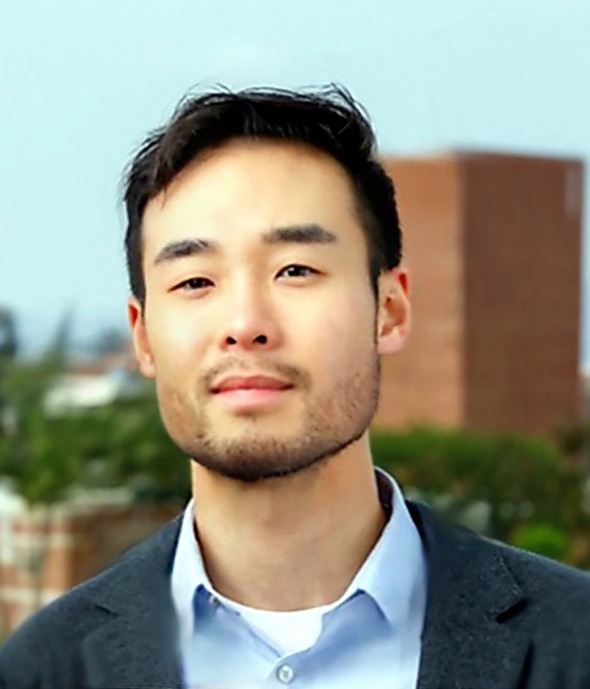
Brian N. Huh

Brian N.
Huh

Behavioral Scientist  ·  Laboratory Manager, USC Marshall

I apply consumer and organizational behavioral science to study how individuals and groups in aviation make judgements and decisions — including how they respond to accidents and incidents, and how they adopt and implement emerging technologies like AI in investigative and operational practice. I also design and manage the research infrastructure that makes this work possible.

Research Interests

01 AI trust and adoption
02 Aviation safety culture
03 Human factors in high-risk environments
04 Behavioral decision-making
05 Organizational and consumer behavior
06 Risk perception
Behavioral Sciences in Aviation Human Factors Trust Artificial Intelligence huhb@marshall.usc.edu

Published · 2024

Human Factors in Focus + Details

Examines how behavioral science frameworks apply to aviation human factors and safety investigations — bridging decision science and operational practice.

ISASI Forum · Vol. 57, No. 1 pp. 26–27, 30 October 2024

In Press

Trust-Centered Investigations: Integrating Human Factors and Behavioral Science with AI in Aviation Safety + Details

Structural equation modeling study across 540 aviation professionals in 47 countries. Professional engagement is the dominant predictor of AI trust (β = 0.727, R² = 48.9%, p < .001).

β = 0.727 R² = 48.9% p < .001 N = 540 · 47 countries

Key Finding

Breadth of professional engagement — not seniority or technical background — is what predicts AI trust among aviation professionals.

Professionals who engage broadly with their field across learning, operational experience, and knowledge resources are better positioned to evaluate and adopt AI tools effectively.

Take the Assessment →

AI Trust Assessment Index (ATAI)

What the research found

Nearly half of why some professionals trust AI more than others comes down to how broadly they engage with their field.

The five dimensions of engagement

Curiosity Actively seeking new ideas and tools
Practical value Seeing real usefulness in AI for your work
Calibrated caution Knowing the limits, not avoiding AI
How it's framed The way AI is introduced to you matters
Access at work Whether your org gives you AI tools

What didn't predict trust on its own

Your job title — pilot, investigator, or manager — alone

Years of experience in aviation alone

Request Full CV ↗

Research and Laboratory Operations

Laboratory Manager Current
USC Marshall Behavioral Research Laboratory
Marshall School of Business, University of Southern California  ·  Los Angeles, CA
2017–Present
Safety Research Consultant
Clay Lacy Aviation
Developed surveys and performance indices for safety programs and vendor evaluation. Conducted data analysis to support operational safety research.  ·  Van Nuys, CA
2024
Research Laboratory Coordinator
Columbia Business School
Center for Decision Sciences  ·  New York, NY
2015–2017
Research Associate
Harvard Business School
Marketing Unit  ·  Boston, MA
2014
Research Assistant
Harvard University  ·  Affective Neuroscience & Development Laboratory, Department of Psychology  ·  Cambridge, MA  ·  2013–2015 University of Chicago Booth School of Business  ·  Behavioral Science and Marketing  ·  Chicago, IL  ·  2014 Stanford University  ·  Psychophysiology Laboratory, Department of Psychology  ·  Stanford, CA  ·  2013 Harvard University  ·  Mental Control Laboratory, Department of Psychology  ·  Cambridge, MA  ·  2011–2013
2011–2015

Publications & Working Papers

Human Factors in Focus
Huh, B. N. (2024). Journal of the International Society of Air Safety Investigators (ISASI Forum), 57(1), 26–27, 30. isasi.org/isasi-forum
Published 2024
Trust-Centered Investigations: Integrating Human Factors and Behavioral Science with AI in Aviation Safety
Huh, B. N. In press. β = 0.727, R² = 48.9%, p < .001. N = 540 across 47 countries.
In press

Conference Presentations

Trust-Centered Investigations: Integrating Human Factors and Behavioral Science with AI in Aviation Safety
Denver, CO
2025
Survey of Human Factors Investigation Practices
With Daniel Scalese, University of Southern California  ·  Savannah, GA
2024

Service & Affiliations

Instructor, Human Factors and Artificial Intelligence — AI System Safety Course
USC Viterbi School of Engineering
USC Aviation Safety and Security Program, LAX Campus.
2026
Member, Human Factors Working Group
International Society of Air Safety Investigators (ISASI)
Contributing author to the Next Generation Human Factors Guide.
2024–2026
USC Aviation Safety and Security Program
USC Viterbi School of Engineering
Cross-school research collaboration, University of Southern California
2024–2026
Mentor, USC Young Researchers Program
University of Southern California
Taught behavioral research skills to high school students.
2019–2026

Education

Master of Science, Applied Psychology
University of Southern California
Consumer and Organizational Behavior · Human Factors in Aviation
2022–2024
Graduate Certificate, Performance Leadership
Cornell University
2024
Graduate Certificate, Business Analytics
University of Southern California
2021–2022
Bachelor of Liberal Arts, Psychology
Harvard University
Social and Cognitive Psychology · Developmental Neuroscience
2011–2015

Acknowledgements

The more you ask, the less you get: When additional questions hurt external validity
Li, Y., Krefeld-Schwalb, A., Wall, D. G., Johnson, E. J., Toubia, O., & Bartels, D. M. Journal of Marketing Research, 59(5), 963–982. https://doi.org/10.1177/00222437211073581
2022
Leveraging affective friction to improve online creative collaboration: An experimental design
Saigot, M. In F. D. Davis, R. Riedl, J. vom Brocke, P.-M. Léger, A. B. Randolph, & G. R. Müller-Putz (Eds.), Information Systems and Neuroscience (pp. 237–250). Springer. https://doi.org/10.1007/978-3-031-13064-9_25
2022
Dissecting “peer presence” and “decisions” to deepen understanding of peer influence on adolescent risky choice
Somerville, L. H., Haddara, N., Sasse, S. F., Skwara, A. C., Moran, J. M., & Figner, B. Child Development, 90(6), 2086–2103. https://doi.org/10.1111/cdev.13081
2019
Immediate rewards predict adherence to long-term goals
Woolley, K., & Fishbach, A. Personality and Social Psychology Bulletin, 43(2), 151–162. https://doi.org/10.1177/0146167216676480
2017
For the fun of it: Harnessing immediate rewards to increase persistence in long-term goals
Woolley, K., & Fishbach, A. Journal of Consumer Research, 42(6), 952–966. https://doi.org/10.1093/jcr/ucv098
2016
The power of good intentions: Perceived benevolence soothes pain, increases pleasure, and improves taste
Gray, K. Social Psychological and Personality Science, 3(5), 639–645. https://doi.org/10.1177/1948550611433470
2012

Professional Affiliations

International Society of Air Safety Investigators (ISASI)  ·  Association for Consumer Research (ACR)  ·  Society for Judgment and Decision Making (SJDM)  ·  Association for Psychological Science (APS)  ·  Social and Affective Neuroscience Society (SANS)  ·  American Psychological Association (APA)

Open to research collaboration, speaking engagements, and consultation on aviation human factors and AI trust. Email is preferred — I respond to all serious inquiries.